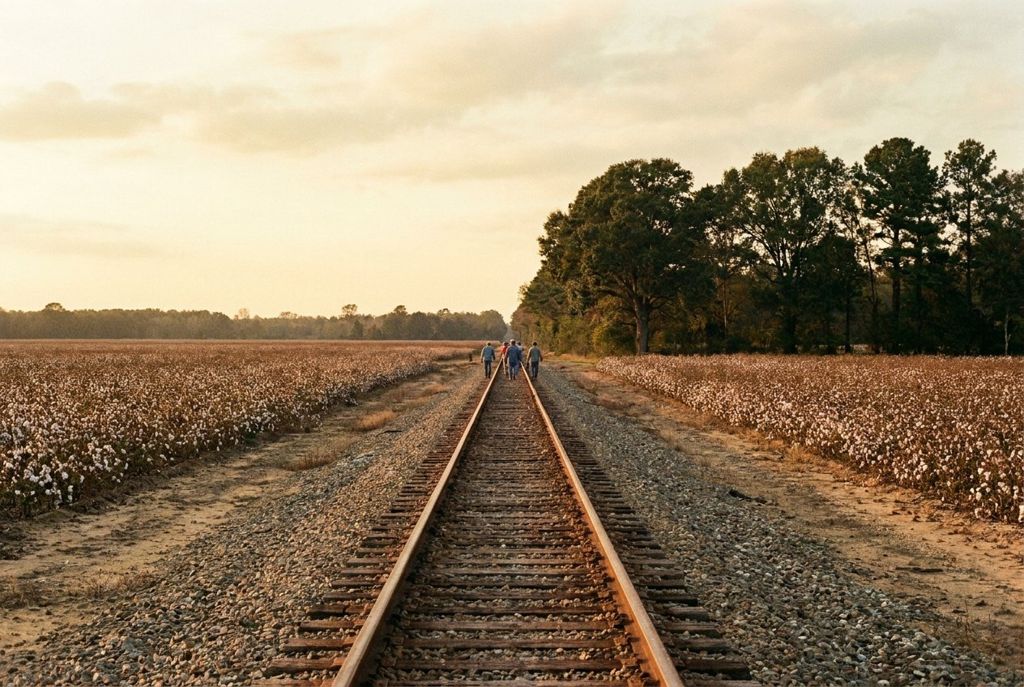
York, the railroad crossroads
York owes its existence to two railroad lines that crossed here in the late 1800s. The tracks still shape the town, and the old brick storefronts have found new uses.
- From LivingstonAbout 10 miles southwest
- Era1870s-1920s
- Getting thereHighway 11 southwest from Livingston
- BringComfortable shoes and a little time
Look for
- Brick storefronts facing the tracks
- Freight trains passing through town
- Church steeples above the trees
- The traffic light at Highway 11
- Old storefronts turned to new uses
Watch every rail crossing in York; freight trains still run through town and some crossings have no gates. Stop, look both ways and never stop on the tracks.
A town the railroads made
Most of the older towns in Sumter County grew up around a courthouse or a river landing. York grew up around a railroad crossing. In the late 1800s two lines met here, one running roughly north and south and the other running east toward Selma and west into Mississippi, and the place where they crossed became a town.
Railroad junctions brought work: freight to load and unload, trains to service, passengers changing lines. They also brought people and money to build with. Stores went up facing the tracks, then churches and houses on the streets behind them. By the early 1900s York had become one of the larger towns in the county, and for a time it rivaled the county seat in trade.
The same pattern played out across the South in those years. A town on the railroad could grow quickly; a town that the railroad missed, like the old river landings, usually began a long slow decline. York is the first kind.
The crossroads today
Highway 11 and Highway 17 meet in York, and the junction is the easiest place to get your bearings. Highway 11 runs northeast to Livingston and southwest toward Cuba and the Mississippi line, and Highway 17 runs north and south through the west of the county. Interstate 20/59 passes just outside town, which is how most people arrive.
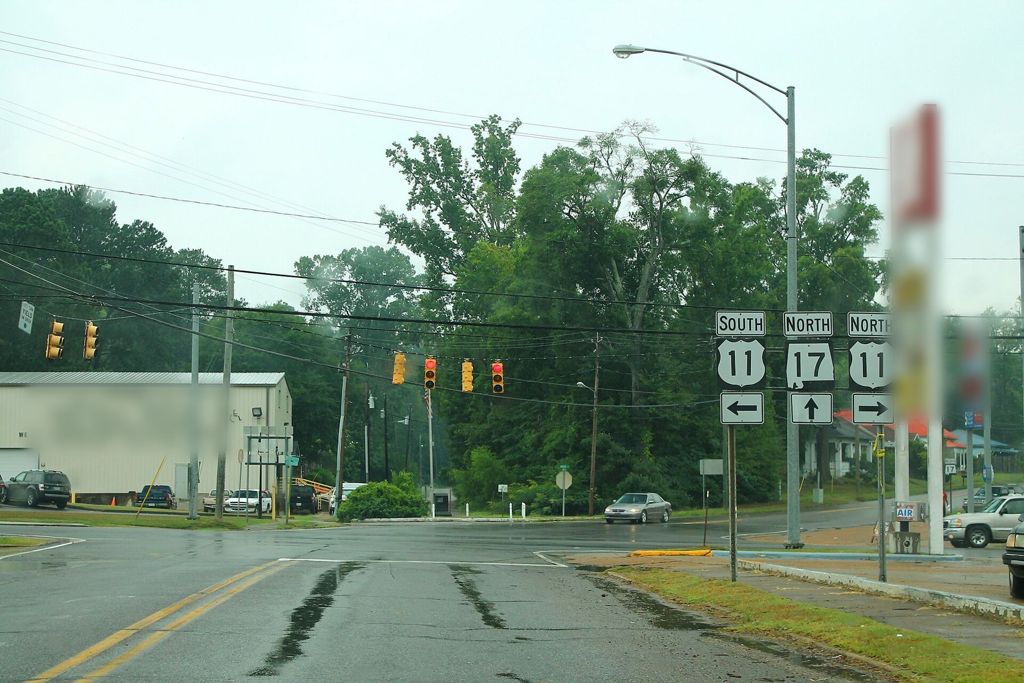
The streets near the junction are a mix of old and new: low modern buildings beside the highway, older homes on the side streets and, a few blocks in, the older downtown near the tracks. Park there and walk.
The town is small enough that you can cover the center on foot in an hour. Walk the length of the downtown first, then cross the tracks at a marked crossing and loop back through the residential streets. Sidewalks are uneven in places and missing in others, so watch your footing and keep to the edge of the road where there is none.
The brick downtown
York's downtown is a short row of one- and two-storey brick buildings, most of them put up in the railroad decades. Look at the upper floors, where the original brickwork is often easier to see than at street level: corbelled cornices, arched window heads and, on some, the faint ghost of a painted sign. Like most small Southern downtowns, it has seen hard years. Some storefronts stand empty, and the businesses in the others change.
What makes York unusual is what has happened to some of those empty buildings. Over the past few decades, artists and community groups have taken over old storefronts and turned them into studios, workshops and exhibition spaces. Projects come and go, and what is open depends on the season and the people involved.
Elsewhere in the county: Cuba, Geiger and the county's crossroads
If small towns on the old roads and rails appeal to you, the page on Cuba, Geiger and the county's crossroads covers the even smaller places nearby, including Cuba a few miles down Highway 11.
Churches and neighborhoods
York's churches stand on the streets around the downtown, their steeples among the tallest things in town. Several congregations date from the town's early years, and their buildings range from plain frame churches to brick ones with stained glass. As everywhere in the county, Sunday morning is for worship; look from outside, and keep drives and steps clear.
The neighborhoods tell the town's history if you look. Like every Southern town of its era, York was segregated by law for most of the twentieth century, with separate schools, churches and parts of town for Black and white residents. The railroad often marked the line. Walking both sides of the tracks gives you a fuller picture of the place than staying on one.
The houses on the side streets are private homes. Many are modest frame houses with porches; a few larger ones from the railroad years stand on wider lots. Enjoy them from the street.
The trains
Freight trains still run through York, and for many visitors they are the best part of the stop. A long train moving slowly through town, horn sounding at each crossing, is a reminder of why the place exists at all. The passenger trains that once stopped here are long gone.
Treat the tracks with respect. Trains are heavier and faster than they look, and they cannot stop quickly. Cross only at marked crossings, never walk along the rails, and keep children close. Photographs are best taken from a safe distance, well back from the right of way.
York is an easy half-day, and it pairs naturally with the county seat. Spend the morning in Livingston, around the courthouse square and the Bored Well, then drive Highway 11 southwest in the afternoon. Spring and autumn are the most comfortable seasons; summer afternoons are hot, and the brick and pavement downtown hold the heat well into the evening.
Weekdays and weekends feel different here. On a weekday you may find more doors open and more people about; on a Sunday the town is given over to church and family. Neither is better, but if you hope to see inside any of the studios, a weekday or an announced event gives you the best chance.
Services in town are limited and change over time, so bring water and plan your meals. If you have more time, the drive north through the farm country leads eventually toward the river and the chalk prairie described on the page about the Black Belt and its soil.